Shrine etiquette in brief
Fushimi Inari is a Shinto shrine and a place of worship, and visitors come to pray as well as to walk. Most of what follows is a common Shinto custom. The rest are rules the shrine sets for its grounds. You do not need to know everything, and nobody expects a visitor to do it perfectly. A calm manner and care on narrow paths go a long way.
This is an independent guide. It does not speak for the shrine, and the house rules below are the shrine's, not ours.
The usual steps at a shrine
A common Shinto custom, in the order you meet it.
1. Bow at the torii
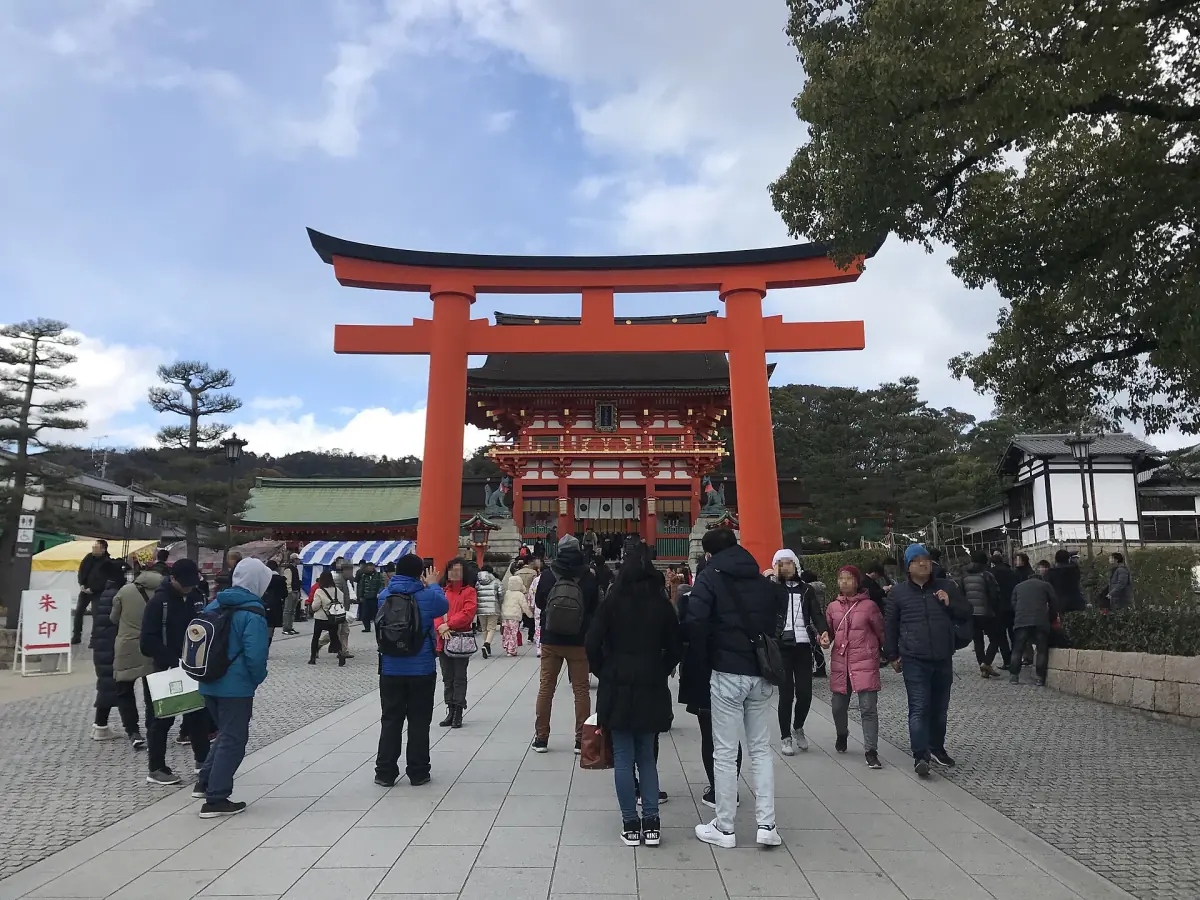
Visitors bow before passing a torii and walk to the side of the path, not down the middle.
2. Wash at the temizu
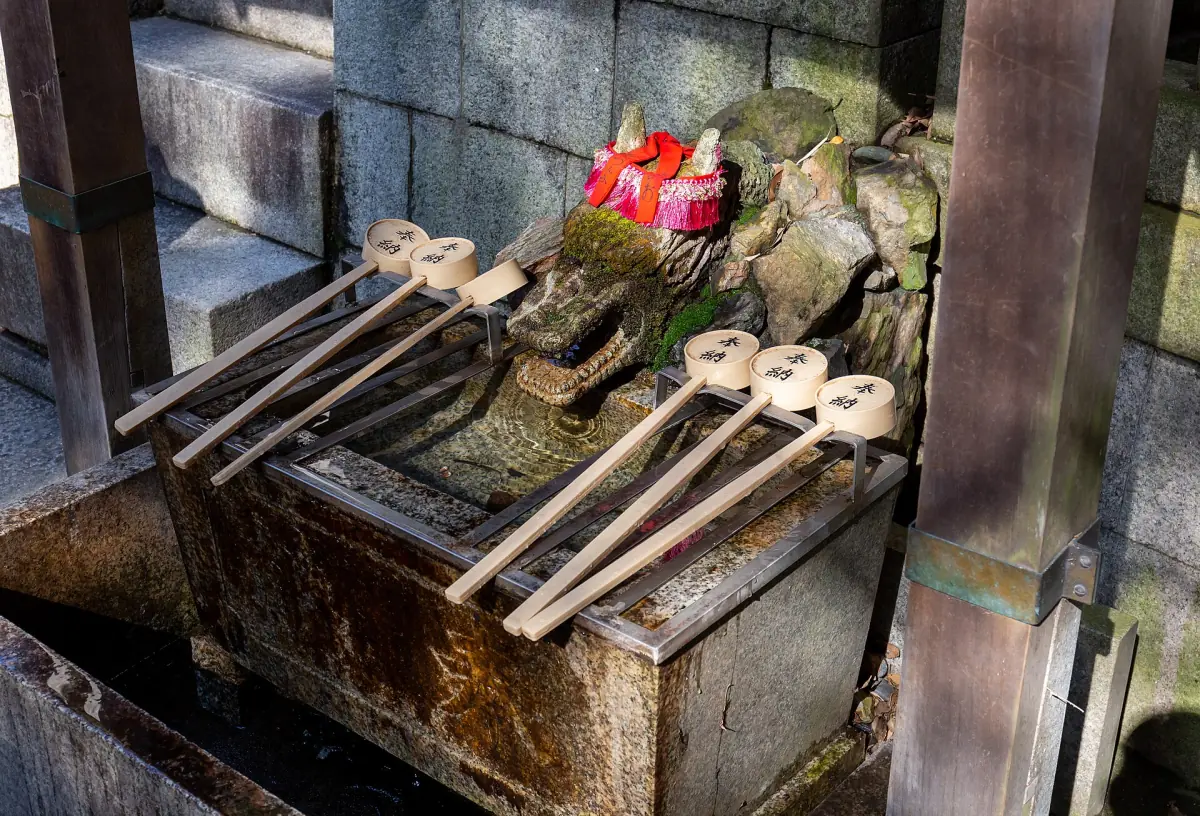
Rinse the left hand, then the right, then your mouth with water from your cupped hand. The ladle does not go directly to the mouth. Ladles may not always be laid out.
3. Pray
At the place of prayer: 2 bows, 2 claps, a prayer and 1 bow.
4. Move on quietly
Keep your voice low and leave room for people who are still praying.
Kyoto tours and day trips
Guided visits to Fushimi Inari and trips around Kyoto, with live prices and availability.
The shrine's house rules
What the shrine asks of everyone on its grounds.
| Topic | The shrine's rule |
|---|---|
| Food and drink | Only in the free rest areas; no eating while walking or standing elsewhere |
| Photography | Not in prohibited areas; no commercial photos; do not block narrow paths |
| Drones, fire, smoking | Not allowed |
| Closed buildings | No entry, especially the Honden and fenced areas |
| Pets | Not allowed; assistance animals are an exception |
| Wild animals | Do not approach or feed |
| Litter and damage | Not allowed |
Photos on the paths
Open all hours does not make the paths a stage.
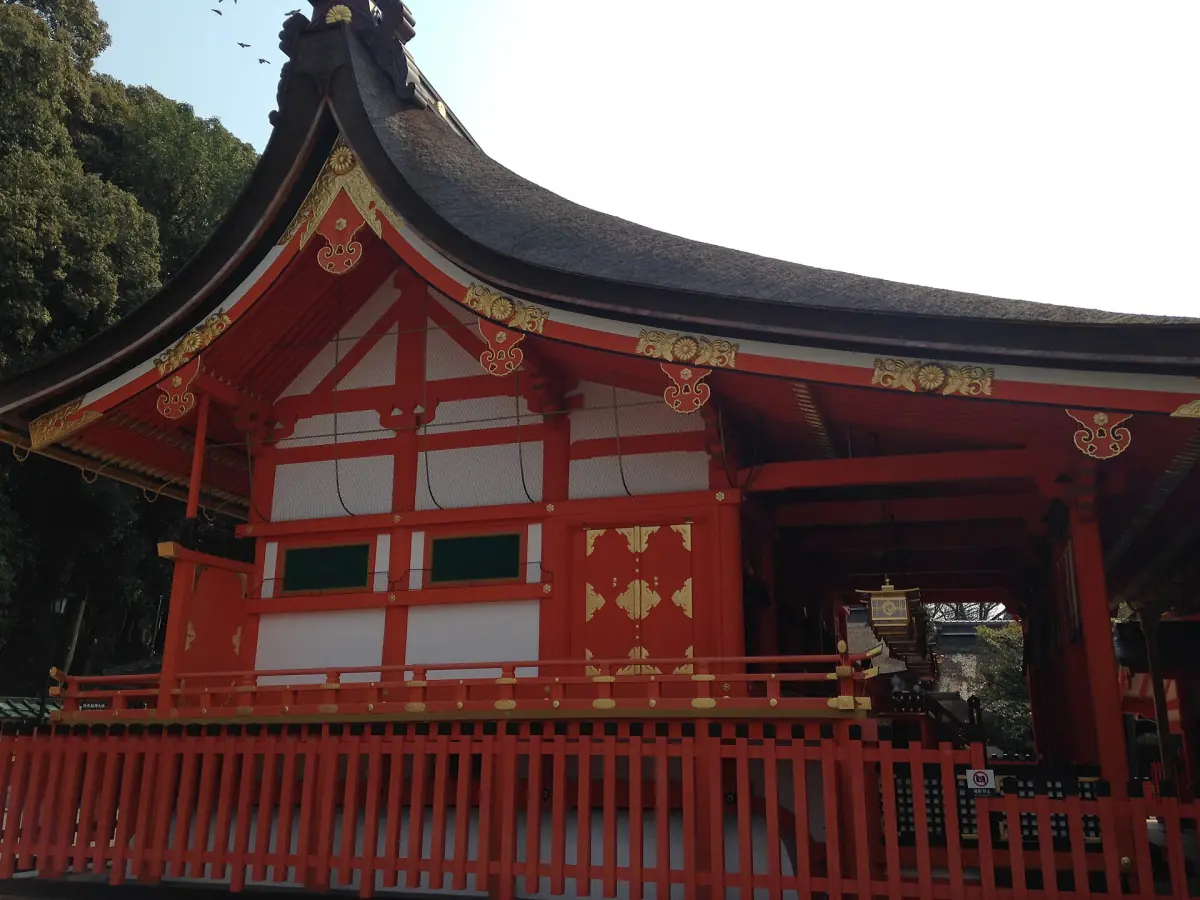
The grounds are open around the clock, but that does not mean unlimited use of the gates as a photo backdrop. In 2026 the shrine renewed its request about photographers who block the way, and about dancing and similar performances in the grounds. Staff on site may speak to people who cause disturbance.
A tip that works anywhere: step to the side before you raise the camera, take two shots and move on. For visits after dark, see the night page.
Kyoto guidelines and Gion
Rules that apply to the city, not only to the shrine.
In 2026 the city's tourism portal restates guidelines for visitors: respect residents' privacy in Gion, keep walkways clear, avoid bringing large luggage into busy places, and take care with waste. None of this adds an entrance quota for the shrine.
In Gion, do not follow, touch or photograph geiko and maiko without permission. Private areas and local photo bans apply. Gion is not closed to tourists, but it is where people live. See the Kyoto page for more.
Kyoto also offers crowd forecasts and live cameras to help you pick a time. Use them as a planning aid, not as a guarantee of how many people are at the shrine. The best time page adds seasons.
Guided tours and kagura
One extra rule for a performance.
If you join a guided tour that includes a kagura performance, photos and video are not allowed during the performance. Ask your guide before the start. Prayers and offerings are separate services with their own fees, which are not entrance prices.
Continuing to Tokyo? Senso-ji etiquette covers a visit to the temple in Asakusa.
Shrine etiquette at Fushimi Inari: frequently asked questions
How do I pray at a Shinto shrine?
A common custom is 2 bows, 2 claps, a prayer and 1 bow at the place of prayer. Before that, bow at the torii and wash your hands and mouth at the temizu.
Can I eat while walking on the mountain?
The shrine asks visitors to eat and drink only in its free rest areas, not while walking or standing elsewhere.
Are photos allowed?
Yes, with limits. No photos in prohibited areas, no commercial photos, and do not block narrow paths. During a kagura performance on a guided tour, photos and video are not allowed.
Can I bring a dog?
Pets are not allowed on the grounds. Assistance animals are an exception.
Can I fly a drone?
No. Drones are on the shrine's list of things that are not allowed.
Do I have to pay to enter?
Walking the grounds is free. Prayer services and amulets are separate and carry their own fees.