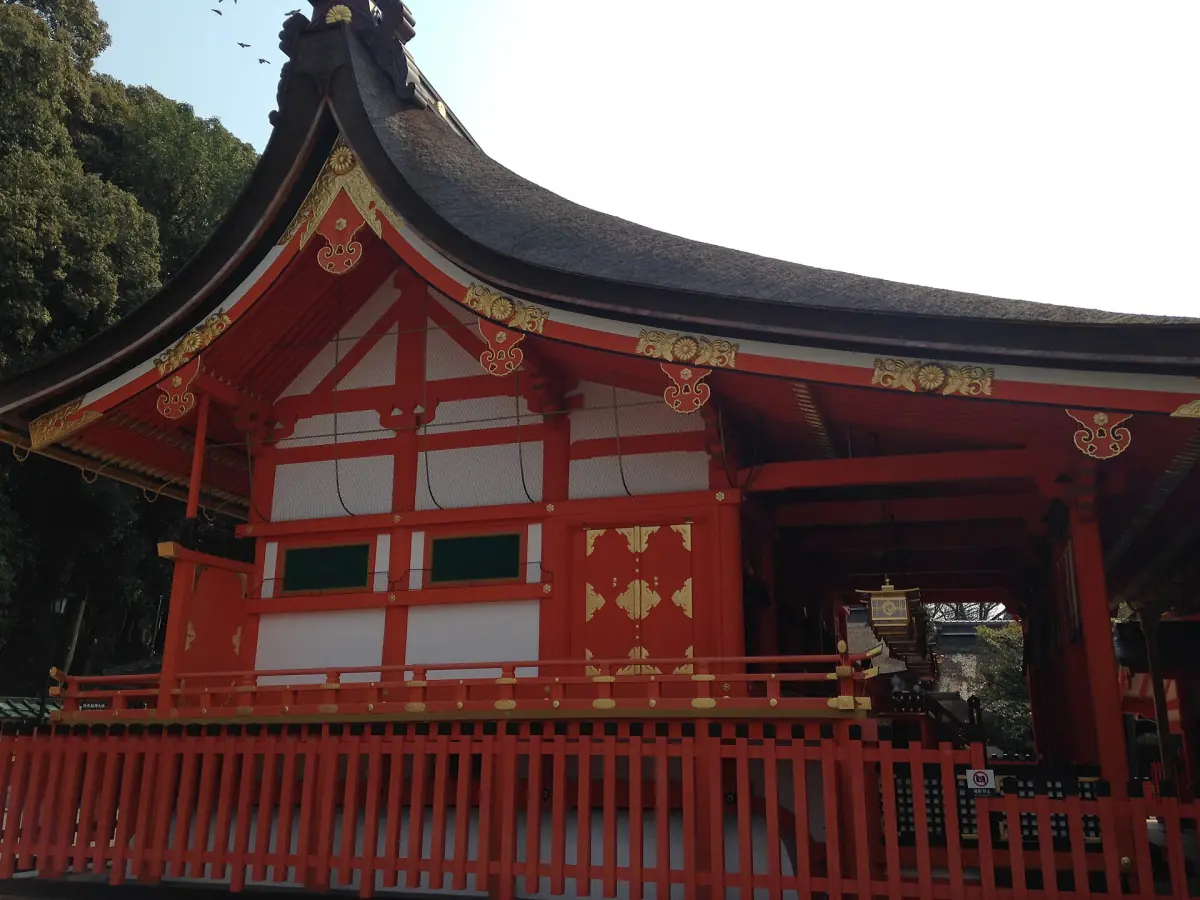
Opening hours at a glance
Fushimi Inari Taisha has no regular closing time and no regular closing day. You can walk the grounds and the mountain paths at any hour, and entry is free. This applies to the open grounds. It does not mean that every building or counter is open around the clock.
Services such as prayer requests and the amulet counter run during the day. At New Year and on festival days the times differ from the normal schedule.
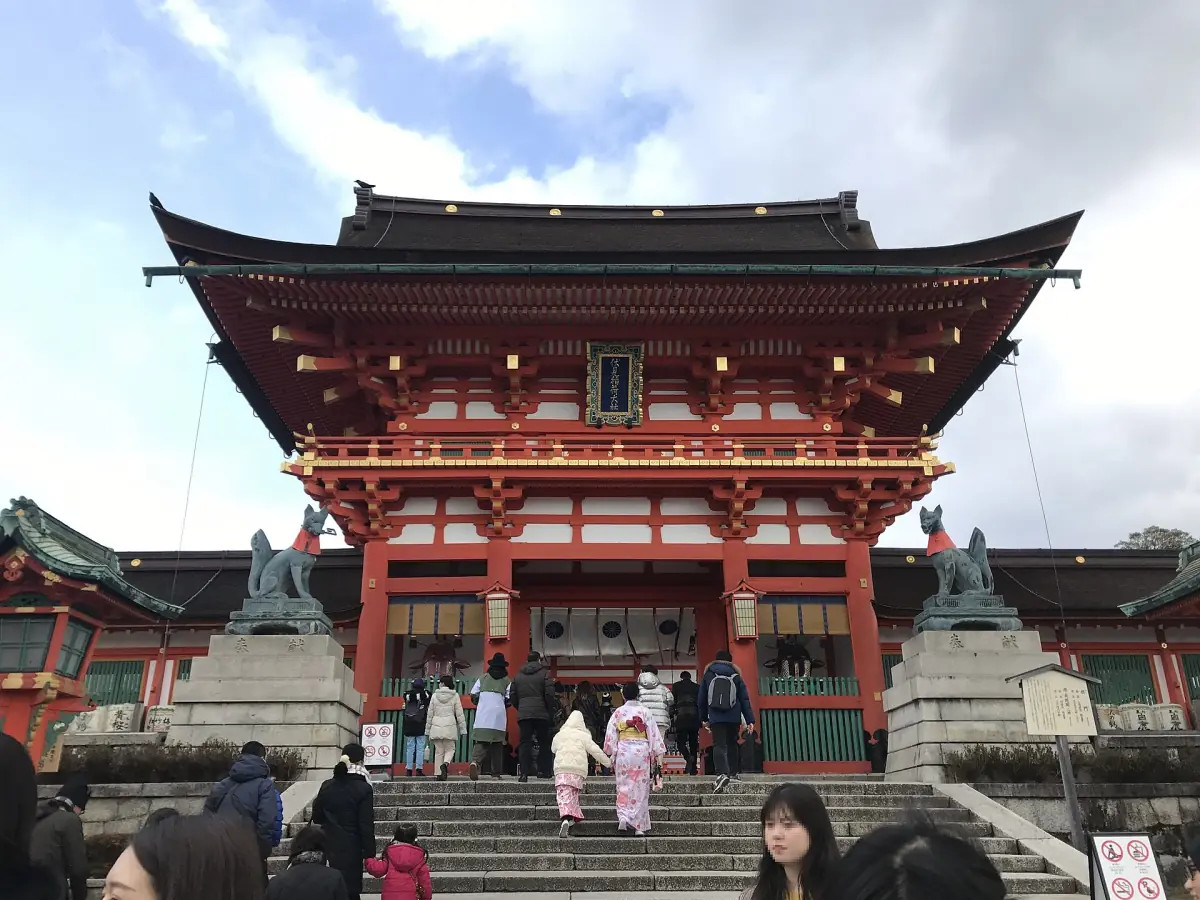
What is open when
Typical times; New Year and festival days differ.
| Area or service | Time | Note |
|---|---|---|
| Grounds and torii paths | 24 hours | All year, no regular closing day |
| Prayer requests (Gokito) | 08:30–16:30 | Registration until about 16:00 |
| Amulet counter | About 08:00 to 18:00 | For a prayer or an amulet, aim for 08:30–16:30 to be safe |
| Main hall interior | – | Closed buildings may not be entered |
The amulet counter is generally open from about 08:00 to 18:00, but individual counters can close earlier. If you want an amulet or a prayer, arrive in the morning or early afternoon and you will be inside the hours either way. Counters work in daytime hours, not at night.
Fushimi Inari tours
Guided visits and Kyoto day tours that fit around the shrine's daytime hours, with live prices and availability.
Prayer requests and fees
Offerings, not admission.
A prayer request (Gokito) is a ceremony held at the shrine. The shrine publishes offering levels of JPY 5,000, 8,000, 10,000, 20,000, 30,000, 50,000 and 100,000. Kagura is listed with the last three levels. These amounts are what you give for the ceremony, and they are not an entry fee. Prayers run all year, apart from different arrangements at New Year and on festival days.
| Offering level | Kagura |
|---|---|
| JPY 5,000 | – |
| JPY 8,000 | – |
| JPY 10,000 | – |
| JPY 20,000 | – |
| JPY 30,000 | Listed |
| JPY 50,000 | Listed |
| JPY 100,000 | Listed |
Prices for individual amulets are not listed here. Ask at the counter.
New Year and festival days
The shrine's recurring calendar.
New Year
Saitan-sai takes place on 1 January at 06:00, with prayers for peace, harvest and well-being. New Year is far busier than a normal day, and times differ from the usual schedule.
Best time to visit →Inari Matsuri
Shinko-sai is on the Sunday closest to 20 April at 11:00, when portable shrines are carried through the district. Kanko-sai follows on 3 May at 16:00.
Motomiya-sai
In July, on the first Sunday or public holiday after Doyo begins, at 09:00. The evening before, at 18:00, the shrine lights stone lanterns and many donated lanterns on the grounds and on the mountain.
Fushimi Inari at night →Exact dates change each year. Festival days can alter prayer and counter times, so check before you plan around them.
Rules that apply at any hour
As stated by the shrine.
The shrine does not allow entry to closed buildings, in particular the main hall, or to fenced areas. Eating and drinking is limited to the marked rest areas. Photos must not block narrow paths. See the etiquette page for the full list, and the hike page if you plan to go up the mountain. Trains do not run all night, so check the last service before a late visit. The getting there page has the details.
Opening hours: frequently asked questions
What time does Fushimi Inari open and close?
The grounds are open 24 hours a day, all year, with no regular closing day. Prayer requests run from 08:30 to 16:30.
Is there an entrance fee?
No. Entry to the grounds is free. Prayers, amulets and guided tours are optional and have their own prices.
Can I go inside the main hall?
No. The shrine does not allow entry to closed buildings such as the main hall. You can walk the grounds and pray outside.
Is the shrine open at night?
The grounds are, but counters and prayer services run in daytime hours. Bring your own light and check the last train. See Fushimi Inari at night.
When is the amulet counter open?
Generally from about 08:00 to 18:00, though individual counters can close earlier. Arrive in the morning if you want to be sure.