Fushimi Inari in brief
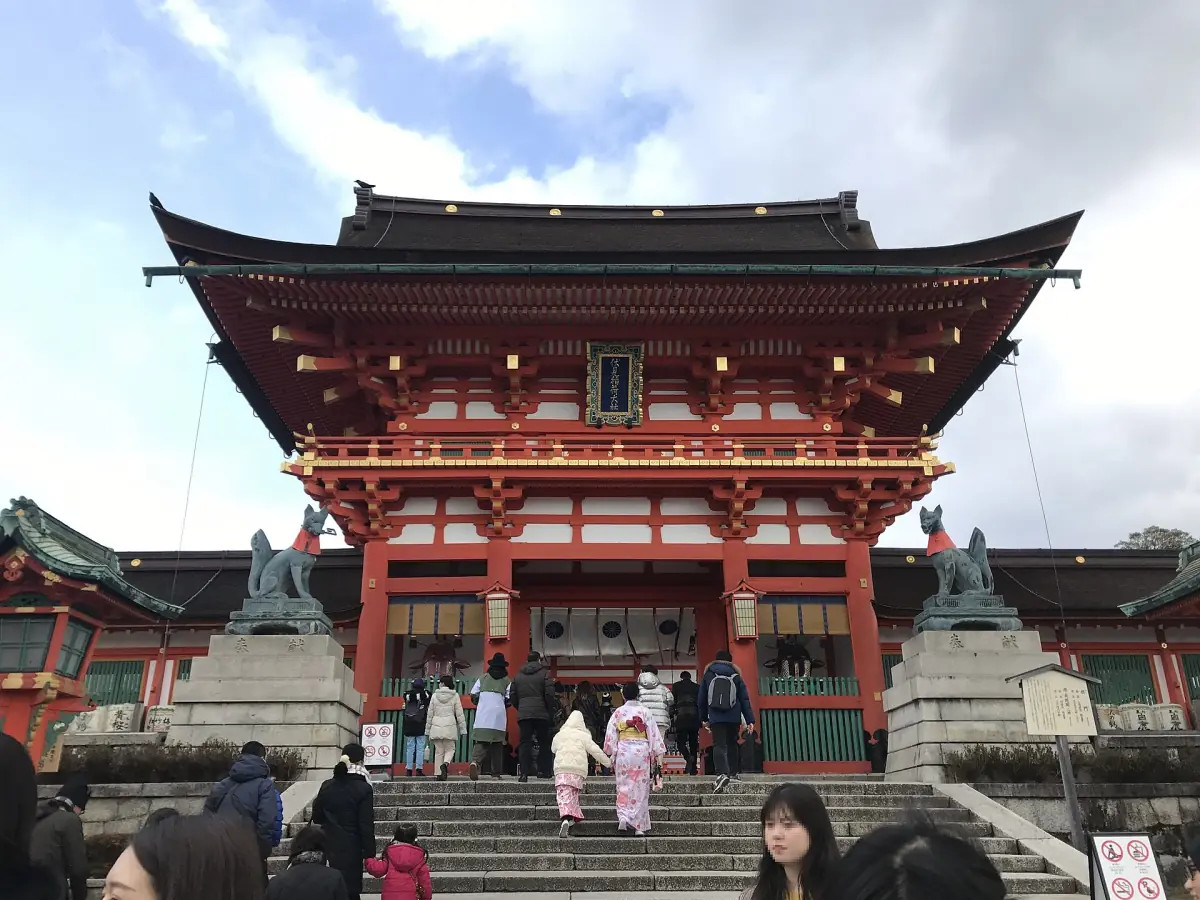
The shrine dates the arrival of the deity Inari Okami on the mountain to 711, on the first Day of the Horse of the second month. That is the shrine's own chronology of its founding. It is not the date of the buildings you see now, and it is not a claim that the gates stem from that time.
Fushimi Inari is the head shrine of the Inari shrines of Japan. The number is usually put at 30,000 to 40,000, depending on how shrines are counted. For a first visit it helps to know three things: who Inari is, why gates and foxes fill the grounds, and which rites still shape the year.
The founding story and the Hata clan
A legend, told as a legend.
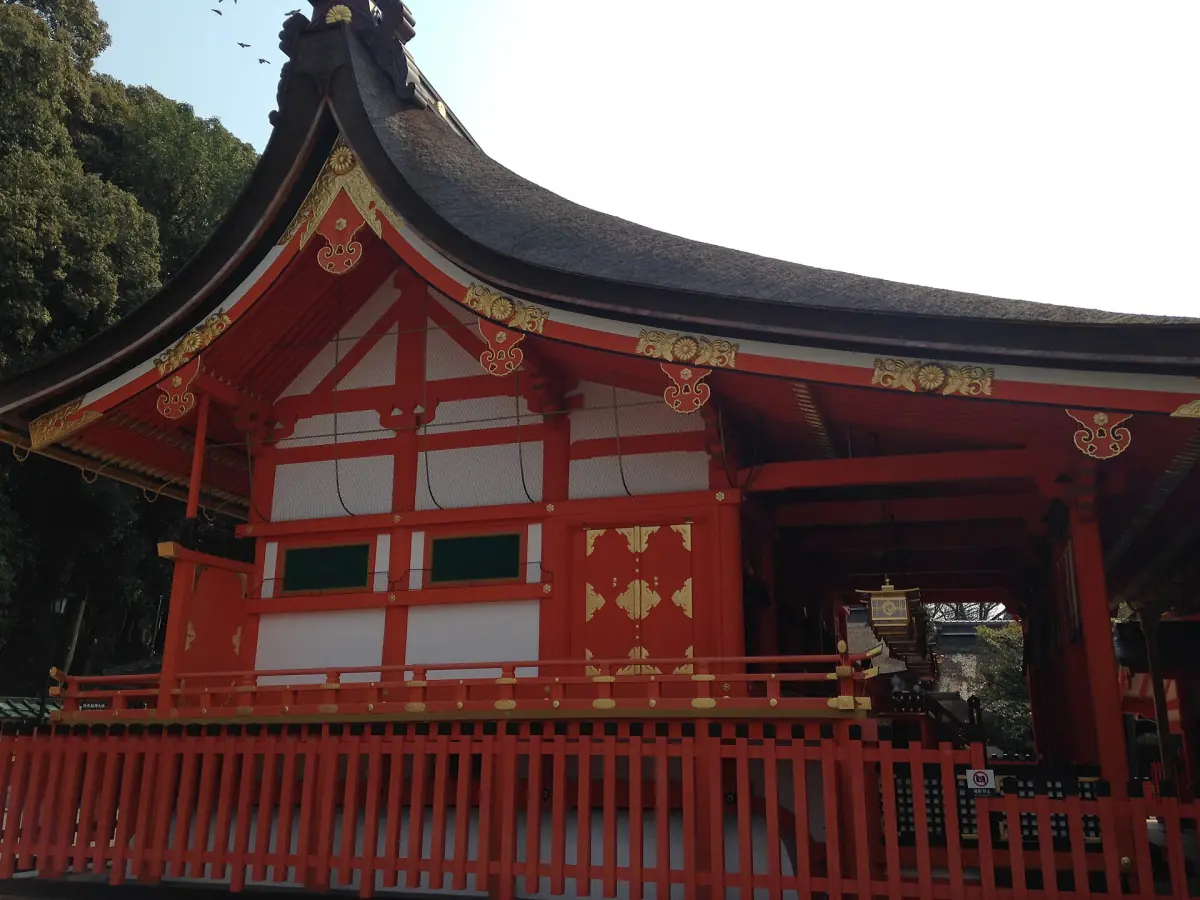
The shrine's account of its origin includes rice cakes, a bird and rice that grows again. It belongs to the origin story and is not a documented event, so read it as tradition. The shrine's own history links the beginning to the Hata clan.
If you remember one thing, make it the link to rice. Inari Okami is tied to the harvest, and from there to trade, household and other blessings. That is why the shrine is tied to farming and to business, and why visitors come here to ask for good fortune. These are beliefs and are given here as such, not as promises.
Kyoto tours and day trips
Guided visits to Fushimi Inari and trips around Kyoto, with live prices and availability.
Who is Inari?
Not the fox, and not one single figure.
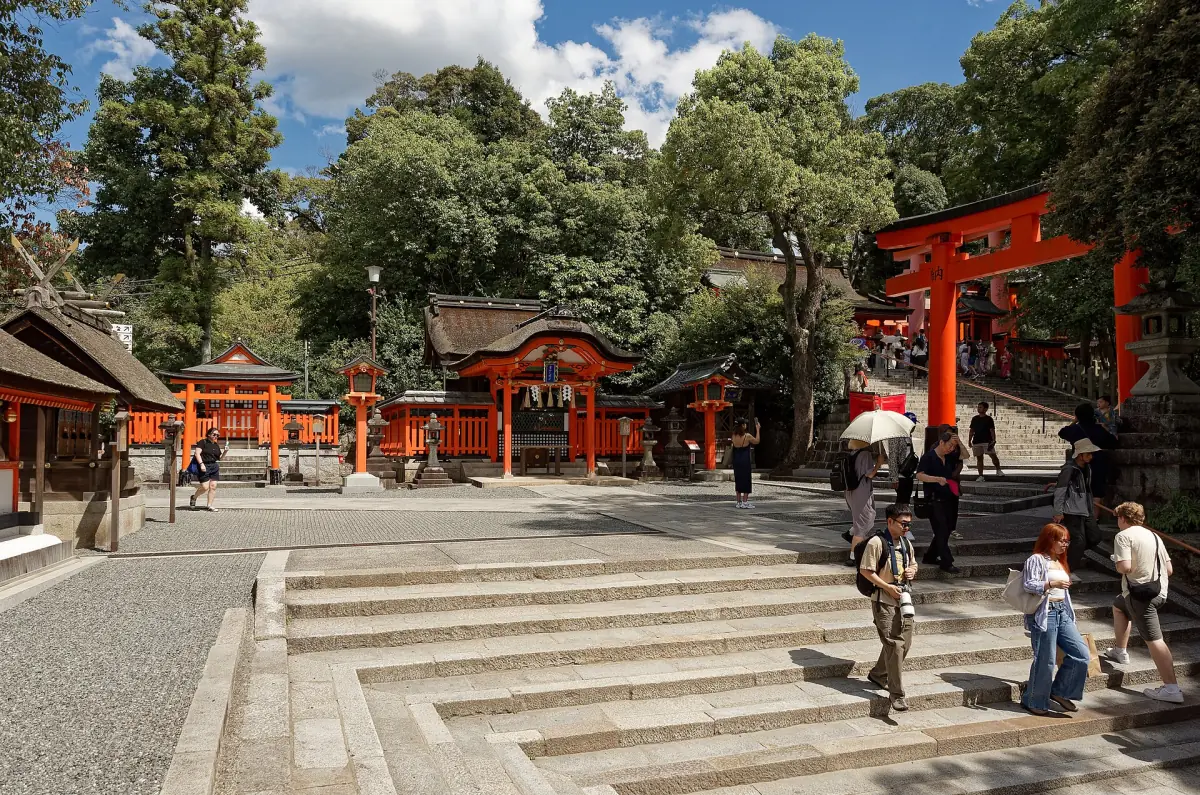
Inari Okami is linked with the harvest, trade, the household and further blessings. A common shortcut calls Inari the fox god. The shrine states that Inari Okami is not a fox. Foxes serve as messengers or attendants, and the white foxes that are venerated are unseen religious beings. The statues you meet on the paths show them. The fox page goes into keys, rice and the food that carries the name.
The main hall (Honden) brings together five shrines in one building. The deities worshipped there stand for different aspects of Inari Okami.
Why the mountain is full of gates
Donations since the Edo period.
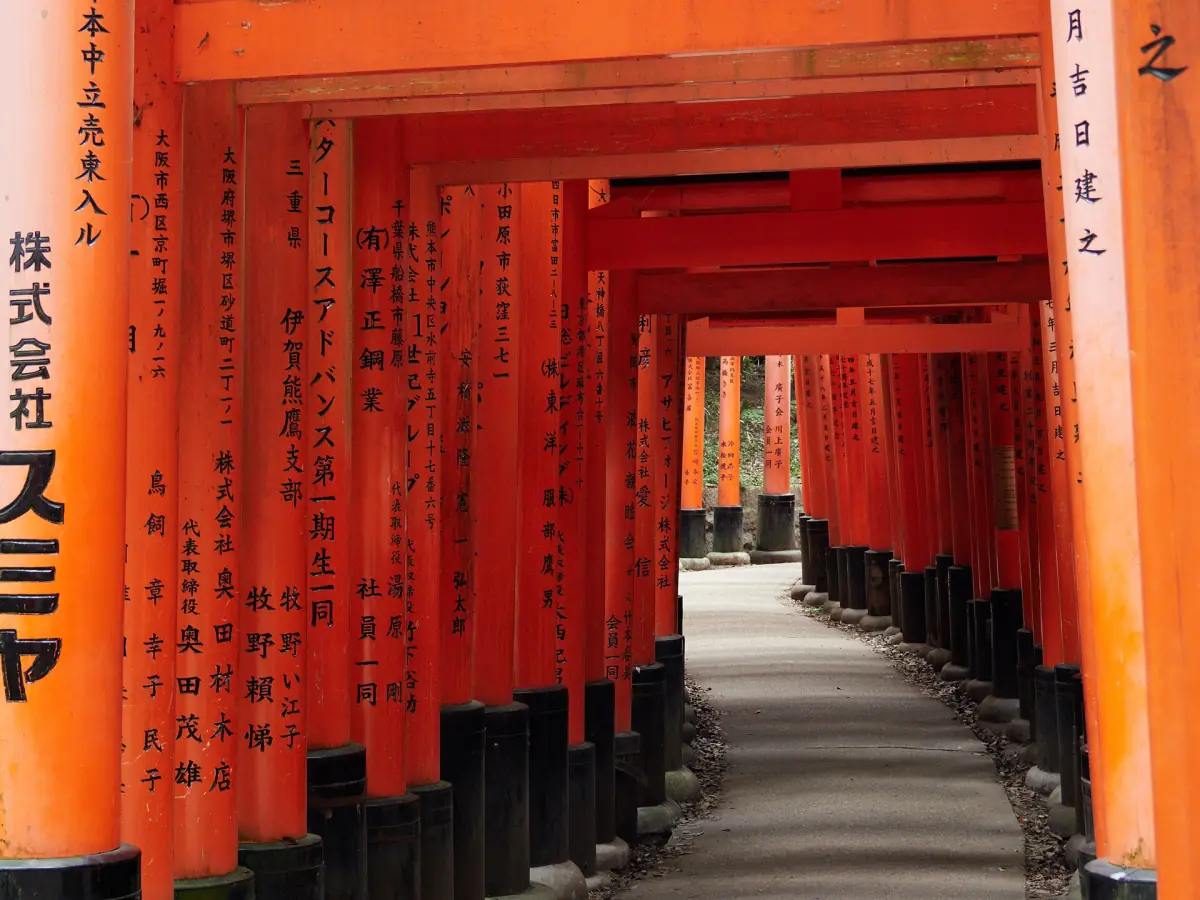
Donating a torii became common from the Edo period, 1603 to 1868. People gave one as a request or as thanks. Donors include companies and private individuals, so it would be wrong to call every gate a business gift. The number of gates of all sizes on the mountain paths is about 10,000 by the shrine's own figure, and some counts say more than 5,000. Nobody has an exact inventory, so use the number as an order of magnitude.
The inscriptions on the back of the gates are donors' inscriptions. For the Senbon Torii and the double path of gates, see the torii page.
The shrine's yearly rites
Recurring dates from the shrine's own calendar.
| Rite | When | Time |
|---|---|---|
| Saitan-sai (New Year prayers) | 1 January | 06:00 |
| Inari-Matsuri, Shinko-sai | Sunday nearest 20 April | 11:00 |
| Inari-Matsuri, Kanko-sai | 3 May | 16:00 |
| Motomiya-sai | July, first Sunday or holiday after the start of Doyo | 09:00 |
| Yoimiya (eve of Motomiya-sai) | The day before | 18:00 |
At Shinko-sai, portable shrines are carried through the area that belongs to the shrine. On special days, services run on different hours than on a normal day, so check the shrine's calendar for the current year. The best time page covers crowds around New Year.
Read the history on site
Where this story shows in the grounds.
The main hall
Start at the Honden, the building that unites five shrines. It is a place of worship, and the grounds around it are for visitors to pray and look.
Etiquette →The inscriptions
Look at the backs of the gates as you climb. Those are the donors' inscriptions.
The hike →The foxes
Look at the statues at the small shrines. They show the messengers, and some hold a key in the mouth.
Fox statues →Fushimi Inari history: frequently asked questions
When was Fushimi Inari founded?
The shrine dates the arrival of Inari Okami on the mountain to 711. That is the shrine's own tradition. The buildings and gates you see today are not that old.
Is Inari a fox?
No. The shrine states that Inari Okami is not a fox. Foxes are messengers or attendants of the deity.
Who built the torii gates?
They are donations. Donating torii became common in the Edo period (1603 to 1868), and donors are companies and private individuals, each giving as a request or in thanks.
How many Inari shrines are there in Japan?
Usually between 30,000 and 40,000, depending on how they are counted. Fushimi Inari is their head shrine.
What is the Hata clan?
The shrine's own history links its beginnings to the Hata clan.
Which festivals take place at Fushimi Inari?
Recurring ones include Saitan-sai on 1 January, Inari-Matsuri in spring and Motomiya-sai in July. Dates and times are in the table above, and special days differ from a normal day.